How to Fix Underperforming Google Ads for Cleaning Services Fast
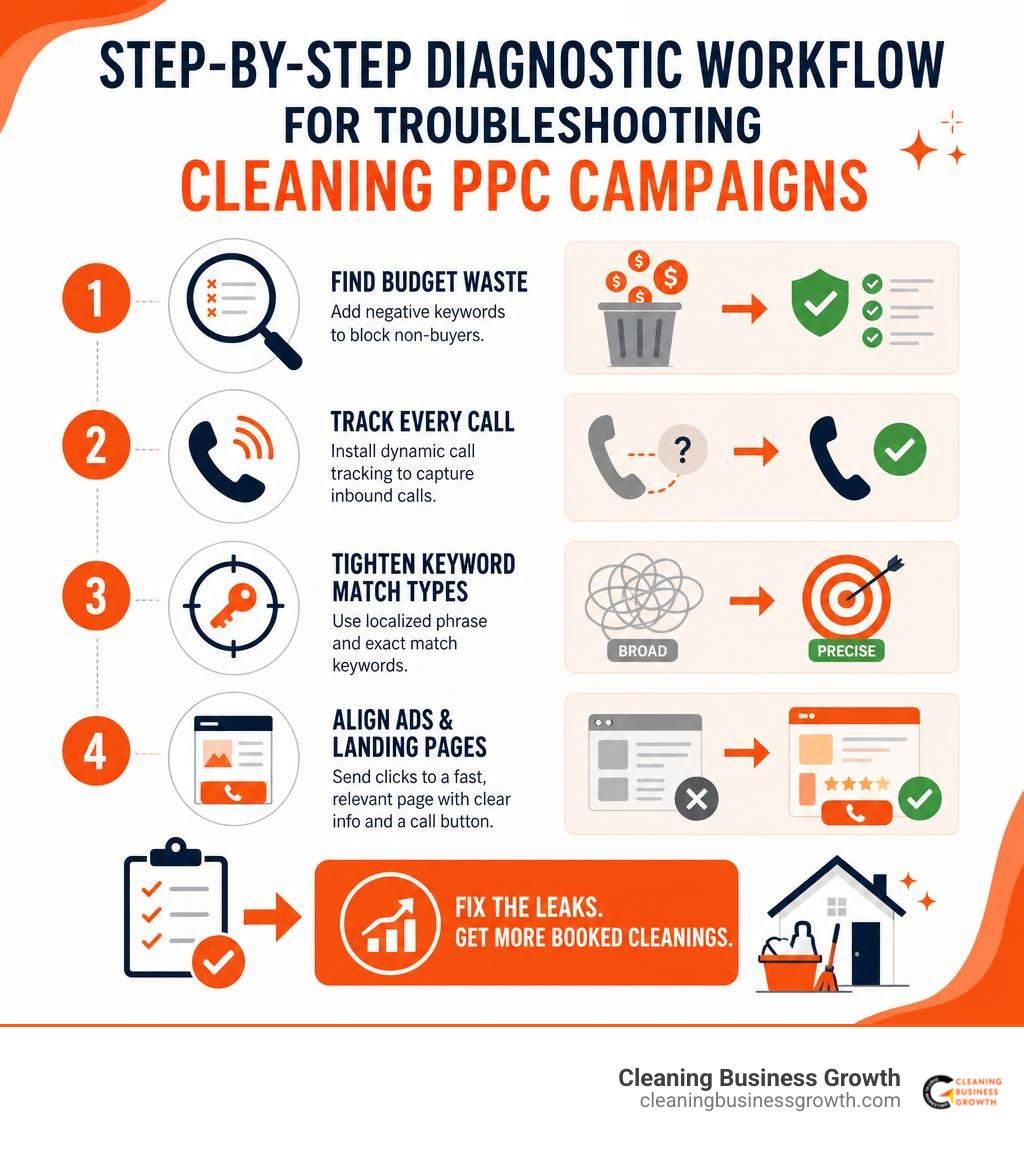
Running google ads for cleaning services should bring you predictable, booked jobs every week—not drained bank accounts and empty calendars. If your campaigns generate clicks without booked cleanings, fix these four critical leaks immediately:
- Plug budget waste with negative keywords: Add negative lists (blocking terms like jobs, salaries, cheap, and DIY) so you stop paying for non-buyers.
- Install dynamic call tracking: Roughly half of all residential cleaning prospects prefer to call rather than fill out a web form. If you do not track inbound calls, your conversion data is broken.
- Tighten keyword match types: Switch from loose broad match keywords to localized phrase and exact match searches (such as “recurring house cleaning [city]” or “move-out cleaning services”).
- Align ad copy with dedicated landing pages: Send clicks to a fast-loading, mobile-friendly landing page featuring clear pricing guidance, customer reviews, and a direct call button above the fold.
I’m Ginger Whitson, founder of Cleaning Business Growth and former owner of Love My Maids, where I scaled my own operation to over $1M in annual revenue. Today, I help residential and commercial cleaners diagnose and scale high-performing google ads for cleaning services to secure reliable, recurring revenue.
Diagnosing Why Your Google Ads for Cleaning Services Are Failing
When Google Ads fail to deliver booked jobs, most cleaning business owners assume paid search simply does not work in their market. In reality, underperformance almost always stems from identifiable technical and structural errors inside the ad account.
About 90% of searchers only click links on the first page of Google. Because paid search ads occupy the most prominent space above the organic results—especially on mobile devices—securing top-of-page visibility is powerful. However, high ad spend without booked jobs usually points to three common culprits: search intent mismatch, low Quality Scores, and broad match keyword traps.
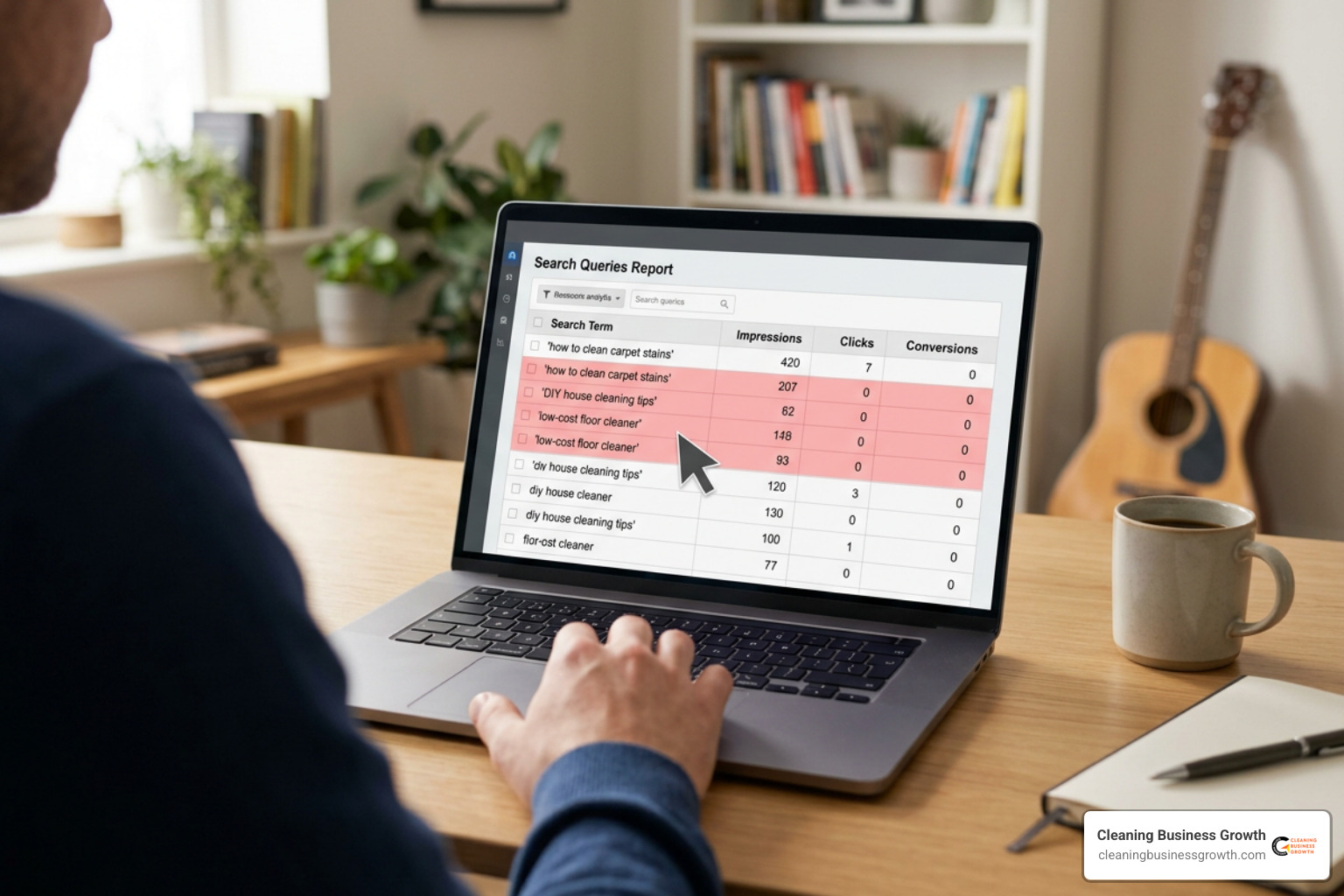
When you rely on broad match keywords without strict parameters, Google matches your ads with queries that have zero commercial intent. A user searching for “how to remove red wine from carpet” is looking for a free home remedy, not hiring a professional crew. If your ad triggers for that query, you pay for an empty click. Over time, low engagement pulls down your Quality Score, which forces you to bid higher amounts for worse ad placements. Fixing these structural leaks leads directly to an improved cost per lead with Google Ads.
Untracked Phone Calls and Inaccurate Conversion Setup
The single biggest blind spot in cleaning PPC campaigns is incomplete conversion tracking. Data shows that about half of people who are interested in cleaning services want to call a company to ask questions before booking. Inviting a service provider into a private home or commercial facility requires personal trust, and many customers want to speak with a live person first.
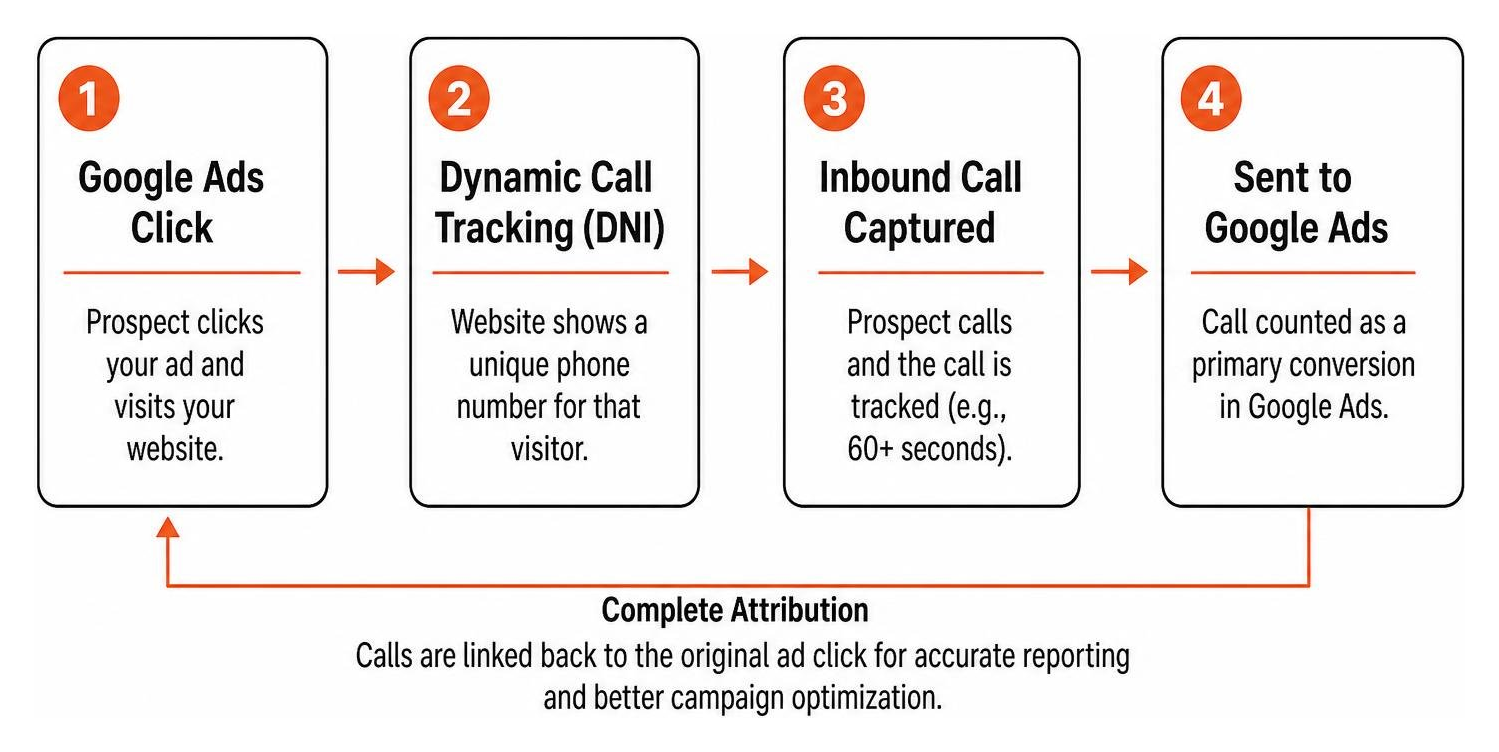
If your Google Ads setup only tracks web form submissions and ignores inbound phone calls, your dashboard will show half the true results. Worse, Google’s automated bidding algorithms will optimize for form-fillers only, starving your highest-converting channel of budget.
To fix this:
- Deploy Dynamic Number Insertion (DNI) across your website using dedicated call tracking software.
- Link your call tracking metrics to Google Tag Manager to record calls over a set duration (e.g., 60 seconds) as primary conversions.
- Pass offline conversion data back into Google Ads when phone leads convert into paid recurring cleans.
Setting up end-to-end phone attribution is how our clients see their tracked Google Ads leads jump 2x without increasing their monthly ad spend by a single dollar.
Missing Negative Keywords and Irrelevant Clicks
Without comprehensive negative keyword filtering, an active cleaning campaign can waste 30% to 50% of its budget on unqualified clicks. You must tell Google explicitly which search terms should never trigger your ads.
At Cleaning Business Growth, our campaign frameworks utilize pre-built negative keyword lists with thousands of filtered terms. Common negative keyword categories include:
- Employment queries: jobs, hiring, salary, application, careers, resume
- DIY & supplies queries: recipe, homemade, chemicals, vacuum repair, how to clean
- Bargain seekers: free, cheap, cheapest, voucher, discount code
- Service mismatches: If you only clean residential homes, exclude commercial, office cleaning, janitorial, industrial. If you only offer janitorial contracts, exclude maid service, house cleaning, apartment turnover.
Auditing Campaign Types and Bidding Strategies
Choosing the right campaign type is essential for generating profitable returns. Google offers multiple ad formats, and selecting the wrong structure for your business model can burn through capital quickly. Understanding why Google Ads campaigns are crucial for growing your residential cleaning service starts with pairing the right campaign type with your operational capacity.
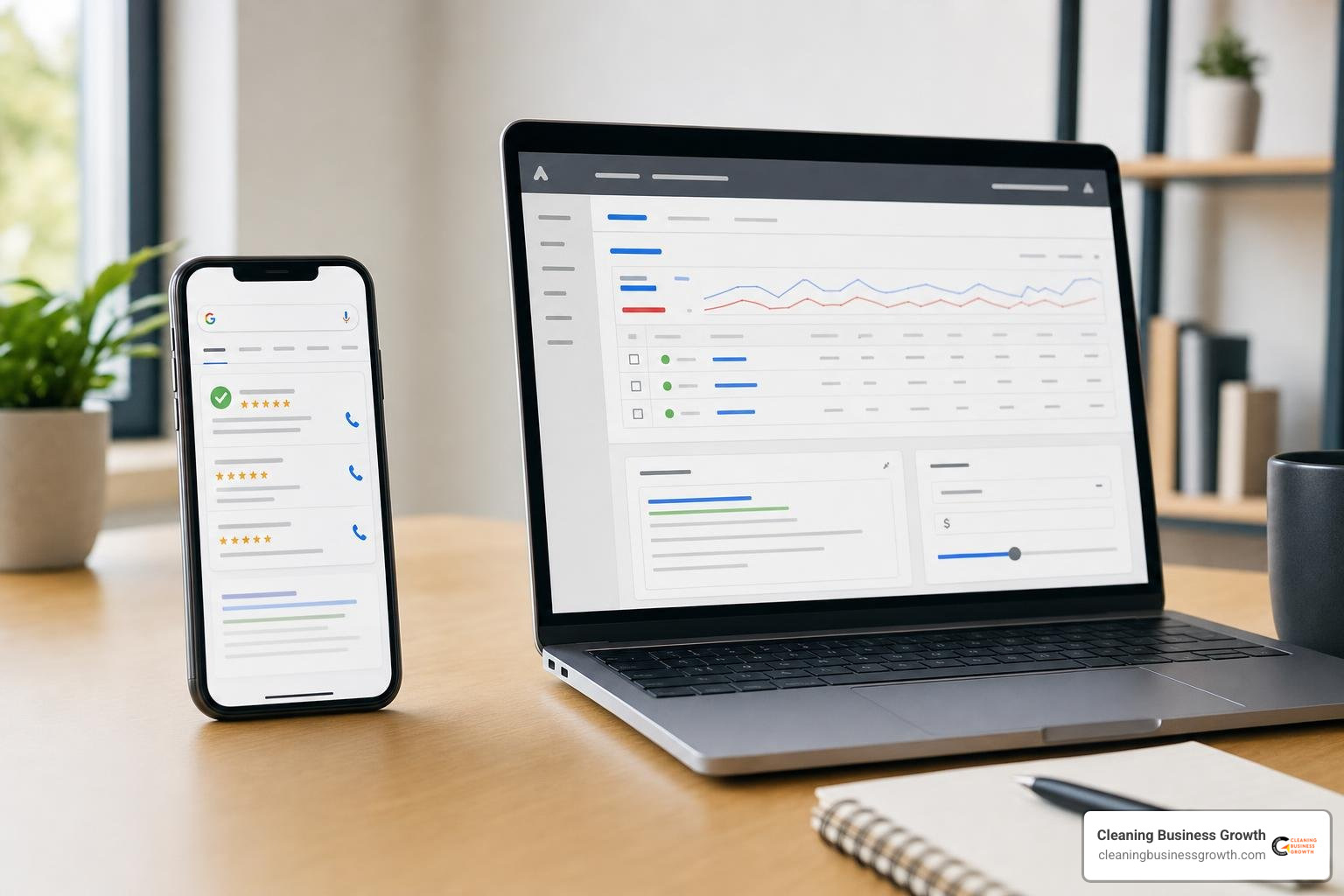
Structuring Google Ads for Cleaning Services Across Search and Local Campaigns
For local cleaning companies, two primary advertising channels drive immediate results: Google Local Services Ads (LSAs) and standard Google Search PPC.
- Google Local Services Ads (LSAs): LSAs appear at the very top of search engine results pages and display the Google Guaranteed badge. Unlike standard PPC, LSAs operate on a pay-per-lead model where you pay only when a prospect calls or messages you directly through the platform. Eligible niches include carpet cleaning, house cleaning, window cleaning, and pool maintenance.
- Google Search Ads (PPC): Traditional Search Ads give you complete control over keyword match types, ad copy messaging, geo-radius boundaries, negative keywords, and dedicated landing pages.
Combining both formats creates comprehensive visibility across page one. While running search campaigns, you can refine your positioning using targeted maid service marketing strategies that highlight reliability, background checks, and automated recurring schedules.
Setting Realistic Budgets and Calculating Customer Lifetime Value
A common budgeting standard for home service businesses is allocating 5% to 10% of gross revenue toward marketing (or 2% to 5% for B2B commercial contracts). To calculate your target daily budget in Google Ads, take your total monthly advertising budget and divide it by 30.4 (the average number of days in a month).
A single recurring house cleaning client can represent a lifetime customer value (LTV) of $15,000 or more over several years of bi-weekly service. When you evaluate your acquisition cost against long-term LTV rather than the initial first-clean fee, a cost per acquisition (CPA) of $150 to $250 delivers an outstanding return on investment.
A conversion rate of 20% to 25% on your dedicated landing pages is an achievable benchmark for well-optimized local campaigns.
| Performance Metric | Residential Maid Service | Commercial Cleaning / Janitorial |
|---|---|---|
| Average Cost Per Click (CPC) | $4.50 – $9.00 | $8.00 – $18.00 |
| Landing Page Conversion Rate | 18% – 28% | 8% – 16% |
| Target Cost Per Lead (CPL) | $25 – $50 | $65 – $140 |
| Lead-to-Close Rate | 35% – 55% | 15% – 30% |
| Average Client Lifetime Value | $3,500 – $15,000+ | $12,000 – $60,000+ |
Optimizing Landing Pages and Ad Creatives for Higher Conversions
Sending paid traffic to your website’s generic homepage is one of the most expensive mistakes you can make. Homepages are loaded with distracting links, company history, and multiple service options that dilute buyer intent.
To maximize conversions, direct every ad to a dedicated, distraction-free landing page designed for local conversions. As part of an integrated approach to digital marketing for cleaning businesses, your landing page must include:
- Fast mobile load times (under 2.5 seconds)
- A prominent phone number and instant estimate form above the fold
- Authentic photography of your uniformed staff and branded vehicles
- Prominent social proof, including star ratings, client testimonials, and trust badges
- A clear breakdown of what is included in standard versus deep cleans
High-Intent Keyword Targeting vs Non-Converting Queries
Structure your ad groups by distinct intent. Rather than bidding on generic keywords like “cleaning,” target tight clusters using phrase match and exact match modifiers.
- High-Intent Phrase Match:
"house cleaning services near me","maid service in [city]","move out cleaning service [city]" - High-Intent Exact Match:
[recurring home cleaning],[hire office cleaners],[emergency move in cleaning]
Specialized services like carpet cleaning are expanding at 6.3% annually through 2028, presenting significant demand for specific, high-intent searches. Setting up dedicated ad groups for carpet stain removal, move-out turnovers, and recurring residential services ensures your ad copy matches the exact phrase typed by the homeowner. To refine your strategy, explore our proven approach to Google Ads PPC.
Scaling Profitable Google Ads for Cleaning Services with Smart Bidding
Once your campaigns register consistent conversion volume (typically 30+ conversions per month), you can safely transition from manual bidding to automated Smart Bidding strategies like Maximize Conversions or Target CPA (Cost Per Acquisition).
Pair your search campaigns with localized ad extensions:
- Call Extensions: Display your direct phone number on mobile search results.
- Sitelink Extensions: Direct searchers to specific sub-pages like “Move-In/Move-Out Cleans” or “Deep Cleaning Checklist.”
- Callout Extensions: Highlight key differentiators such as “Background-Checked Cleaners,” “Supplies Provided,” and “100% Satisfaction Guarantee.”
Testing responsive search ads and refining ad copy has driven documented success, such as our improved lead flow for Michigan company case study, proving that structured ad creative testing directly lowers acquisition costs.
Frequently Asked Questions About Cleaning Ads Optimization
How much should a cleaning company spend on Google Ads?
Most residential cleaning companies start effectively with an advertising budget between $1,000 and $2,500 per month, while commercial janitorial operations often invest $2,500 to $5,000+ monthly. Calculate your daily budget by taking your monthly target and dividing it by 30.4.
Why are my cleaning service Google Ads generating clicks but no calls?
This usually occurs when you send mobile visitors to a slow-loading homepage, target overly broad keywords with low buying intent, or fail to place an interactive “Click to Call” button in an obvious position above the fold on your landing page.
When should I hire an agency to manage my cleaning ads?
If you are spending more than $1,000 per month and struggling to maintain a 20% landing page conversion rate, or if managing keyword bids pulls you away from core operations, partnering with a specialized agency is recommended. Review our verified marketing case studies to see how industry-specific management delivers consistent client growth.
Conclusion
Running profitable paid search campaigns requires a systematic approach: continuously refining negative keyword lists, tracking phone calls alongside web forms, maintaining mobile landing pages, and setting bids aligned with real customer lifetime value.
Rather than letting ad platforms drain your marketing budget on unqualified clicks, use the diagnostic steps above to fix lead leaks and build a predictable client acquisition engine. Pair your paid strategies with organic SEO for cleaning services to dominate search engine visibility across your entire local service area.