
Win More Bookings With Local SEO for Cleaning Service
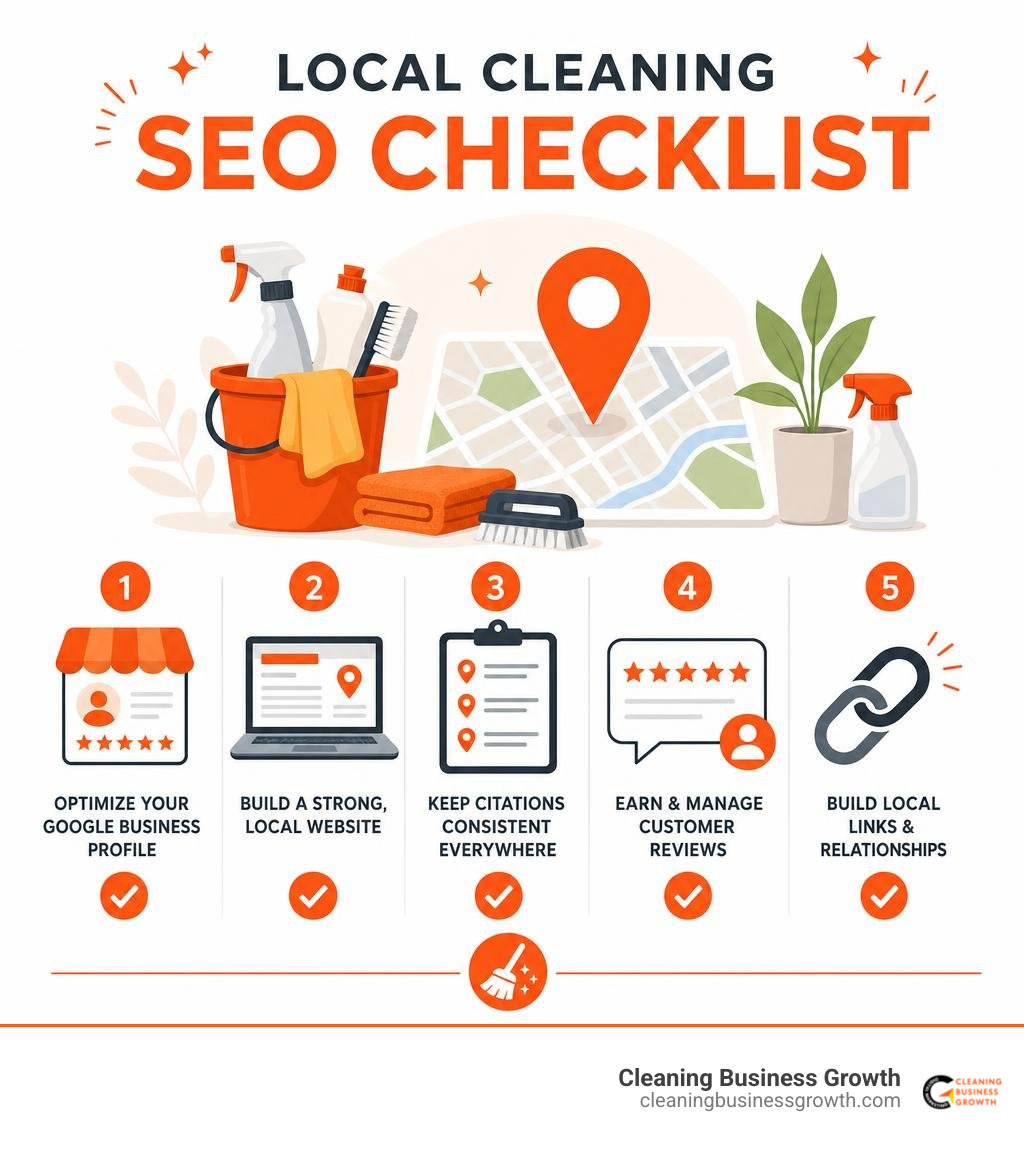
Local SEO for cleaning service helps your business appear when nearby homeowners, renters, and office managers search Google for a cleaner. Start with these four moves:
- Claim and complete your Google Business Profile.
- Use consistent business details across your website and directories.
- Build separate pages for the services and areas you truly serve.
- Request Google reviews after each successful job and reply to every customer.
This work matters because local searchers often need help now. They compare the Map Pack, reviews, photos, prices, and booking options before they call. A strong local presence can replace some expensive pay-per-lead spending with a steadier flow of high-intent calls and quote requests.
The opportunity is growing in 2026. The U.S. janitorial and cleaning services market is projected to reach $112 billion, while local intent drives a major share of Google searches. Your goal is not simply to “do SEO.” It is to make Google confident that your cleaning company is relevant, trusted, and available in the places your best customers live or work.
I am Ginger Whitson, founder and CEO of Cleaning Business Growth. After building and growing my own cleaning business and spending more than two decades in consulting and organizational change, I help cleaning companies use local SEO for cleaning service to create more predictable revenue and lower their dependence on costly lead sources.
Why Local Search Dominates the Cleaning Industry in 2026
When someone discovers an accidental red wine spill on their wool rug or needs a move-out turnover clean by Friday morning, they don’t open social media to browse aesthetic lifestyle reels. They reach for their phone and search Google. In fact, 99% of consumers use the internet to find local businesses, and 88% of those searching on a smartphone call or visit a business within 24 hours. Local search drives 46% of all Google queries, and over 60% of those searches happen on mobile devices.
Understanding how search engines match nearby customers with local contractors is a core part of comprehensive digital marketing for cleaning businesses. In August 2026, the evolving landscape of SEO favors businesses that establish a verified, geographically relevant footprint. When you master local search, your customer acquisition cost drops because your pipeline is fueled by zero-marginal-cost inbound traffic rather than rented pay-per-click ad auctions.
Understanding the 3-Pack and Customer Search Intent
The top section of local Google results is the coveted Google 3-Pack (the Map Pack). Getting placed here places your phone number, star rating, business hours, and operational areas right in front of motivated searchers.
Search intent in the cleaning sector breaks down into clear categories:
- Commercial & B2B intent: Facility managers and office administrators searching for “nightly office janitorial services” or “commercial floor maintenance contract.”
- Residential “money” intent: Homeowners and tenants seeking immediate solutions like “deep house cleaning service,” “move-out cleaning near me,” or “routine maid service.”
- Informational intent: Do-it-yourself queries such as “how to remove hard water stains from glass,” which are ideal for blog articles that build regional topical authority.
The difference in performance between organic search channels and shared pay-per-lead marketplaces is substantial:
| Channel Metric | Organic Local Search & Google 3-Pack | Third-Party Pay-Per-Lead Platforms |
|---|---|---|
| Lead Exclusivity | 100% exclusive to your business | Shared with 3 to 5 competitor services |
| Average Close Rate | 14.6% close rate for organic search leads | 1.7% to 4.0% industry average close rate |
| Ongoing Lead Cost | Zero marginal cost per click or call | $35 to $120+ charged per shared inquiry |
| Asset Ownership | You own your digital presence and reviews | You rent access on another platform’s directory |
Proximity, Prominence, and Relevance Factors
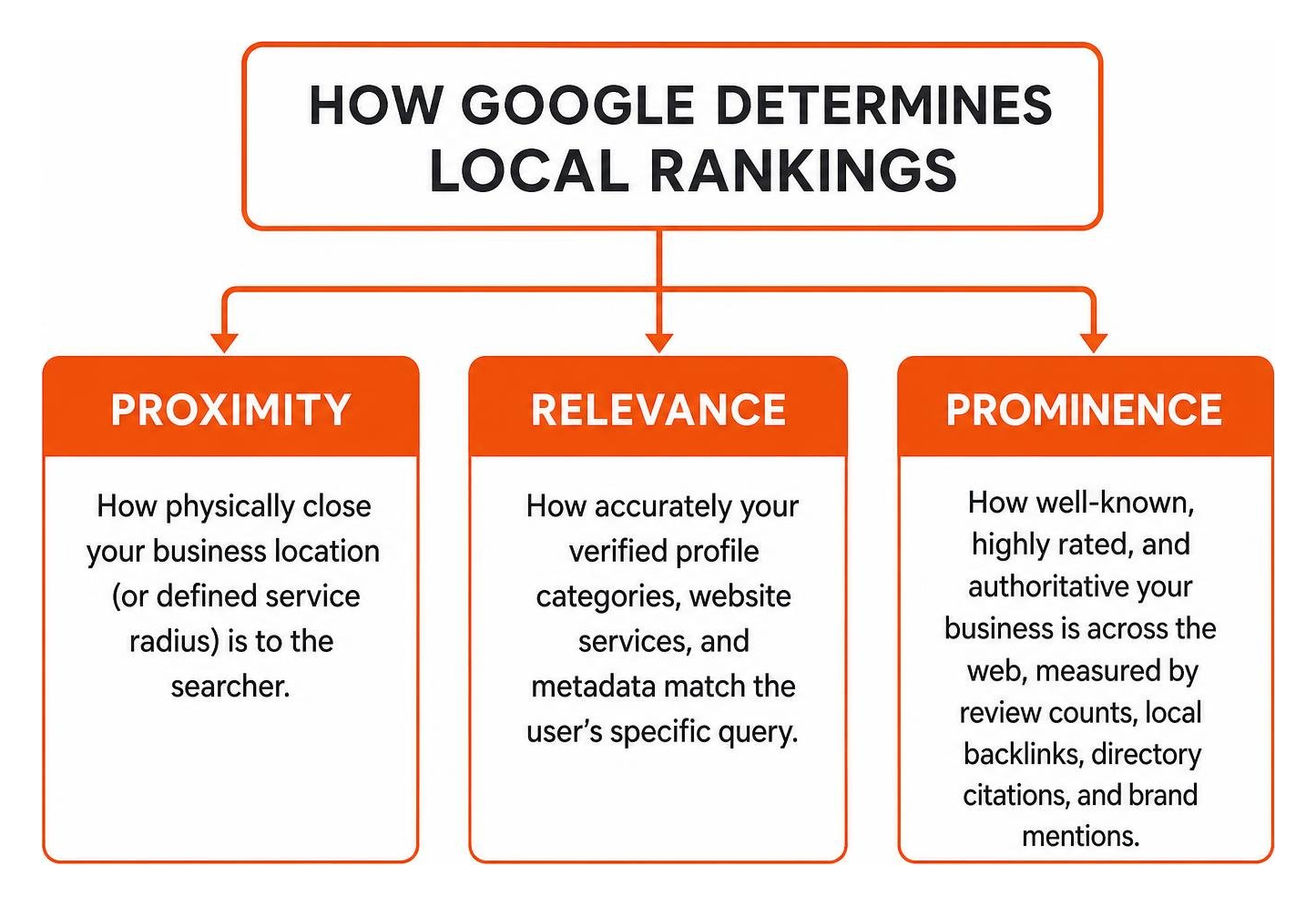
Google calculates local search rankings using three primary factors:
- Proximity: How physically close your business location (or defined service radius) is to the searcher.
- Relevance: How accurately your verified profile categories, website services, and metadata match the user’s specific query.
- Prominence: How well-known, highly rated, and authoritative your business is across the web, measured by review counts, local backlinks, directory citations, and brand mentions.
With AI changing local SEO and search engines relying heavily on verified entities to assemble direct answers, optimizing these three pillars ensures algorithms recognize your company as the premier choice in your service area.
Step-by-Step Google Business Profile Optimization
Your Google Business Profile (GBP) is the cornerstone of your local presence, accounting for roughly a third of all Local Pack ranking weight. A complete profile establishes immediate credibility and direct lines of communication.
Profile Setup, Verification, and Category Selection
Setting up your profile correctly sets the foundation for your local visibility:
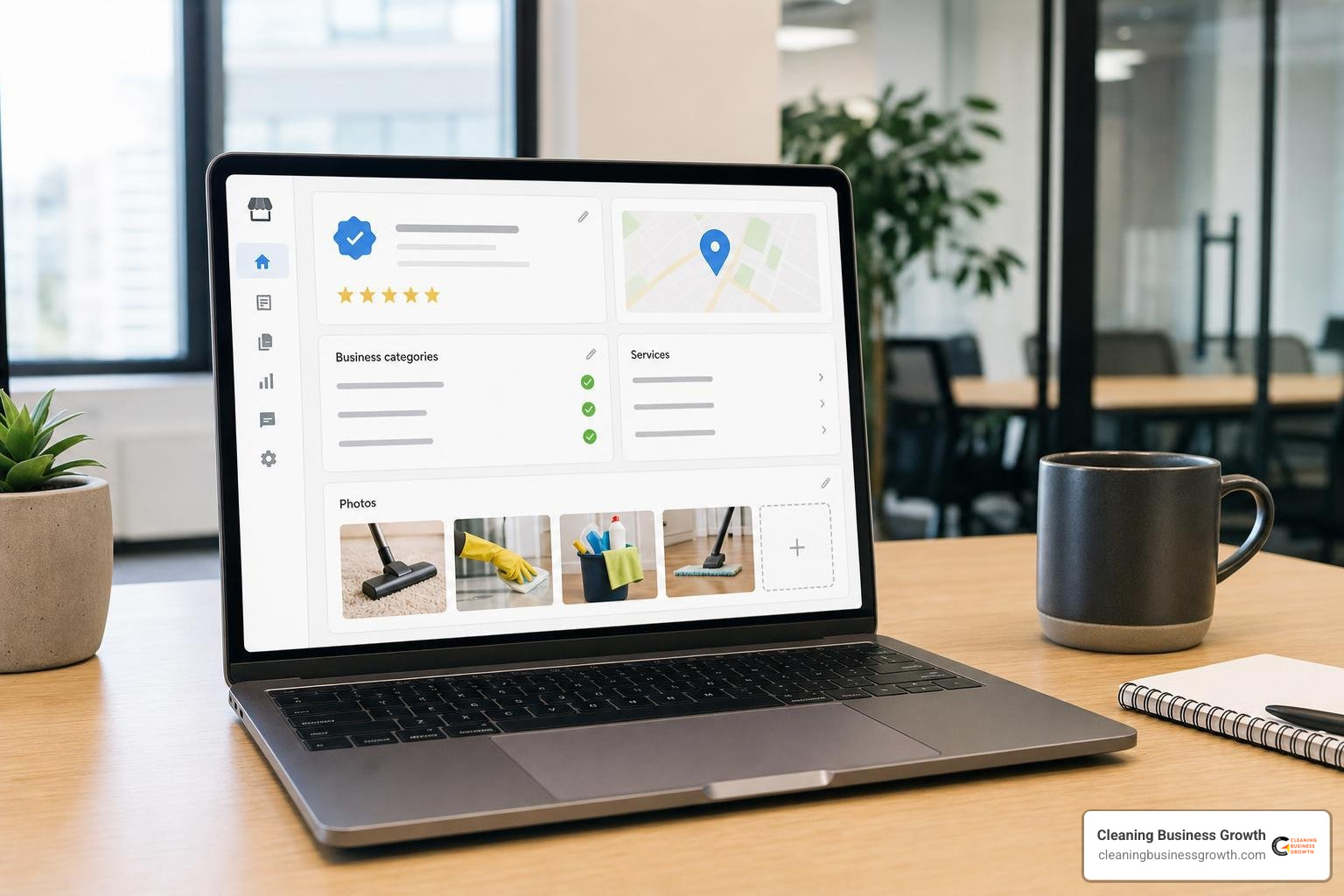
- Claim and Complete Every Field: Ensure your legal company name, exact operating hours, website link, and booking URLs are completely filled out.
- Select Accurate Primary Categories: Your primary category carries immense weight. If you focus primarily on residential homes, choose “House Cleaning Service.” If you handle corporate offices and industrial spaces, select “Commercial Cleaning Service.” Add secondary categories such as “Carpet Cleaning Service,” “Window Cleaning Service,” or “Janitorial Service” to capture relevant adjacent searches. For practical tips tailored to residential operators, check out this guide on Local SEO for House Cleaners: Complete Guide to Ranking #1 | Vida AI Agent OS .
- Service-Area Business (SAB) Configurations: If you dispatch cleaners to client homes from a residential address or warehouse without customer walk-ins, configure your profile as a Service-Area Business and conceal your street address to comply with Google’s guidelines while listing your target service cities and postal codes.
- Craft a Detailed Business Description: Write a clear, 750-character profile description detailing your services, background, eco-friendly or pet-safe cleaning options, and primary coverage areas without stuffing keywords unnaturally into your legal business name.
Visual Assets, Geotagging, and Weekly Google Posts
Profiles with real photography convert searchers at a much higher rate. Google Business Profiles with photos receive 42% more requests for directions and 35% more click-throughs to websites than those without.
- Upload Authentic Imagery: Add high-resolution photos of your uniformed cleaning technicians, branded fleet vehicles, organized equipment, and before-and-after transformations. Aim to build a library of 50 to 100+ images over time, adding fresh pictures monthly.
- Publish Weekly Google Updates: Post an update at least once every 7 days. Highlight seasonal deep-cleaning packages, post-construction cleanup offers, employee spotlights, or quick stain-removal tips with a direct “Book” or “Call Now” button.
On-Page and Technical Local SEO for Cleaning Service Sites
Your website acts as the organic anchor that verifies and strengthens your Google Business Profile. Executing proven SEO strategies for cleaning companies turns your web pages into 24/7 lead-generation machines.
Keyword Research and On-Page Local SEO for Cleaning Service Sites
Effective keyword research maps customer intent directly to specialized pages. Avoid relying solely on broad terms like “cleaners.” Instead, capture specific, high-intent queries that indicate ready-to-buy prospects:
- Target High-Intent Phrases: Optimize for phrases such as “recurring house cleaning service,” “deep kitchen cleaning,” “move-in cleaning specials,” and specialized maid service marketing topics. For a broader look at structuring these technical workflows, review these insights on SEO for cleaning businesses.
- Title Tag Formulation: Use structured formulas like
[Service Type] in [City, State Abbrev] | [Business Name](e.g.,Deep House Cleaning in Austin, TX | Sparkle Clean Pros). Keep titles under 60 characters to prevent truncation. - Meta Descriptions & Headers: Write engaging meta descriptions with clear value propositions and phone numbers. Structure your body content using a clean header hierarchy: an H1 for the primary topic, followed by H2s and H3s for subtopics and specific service inclusions.
Building High-Converting Hyperlocal Service Area Pages
If you clean properties across multiple cities or distinct neighborhoods, a single generic contact page will not rank across every market. Dedicated service area landing pages bridge this gap.
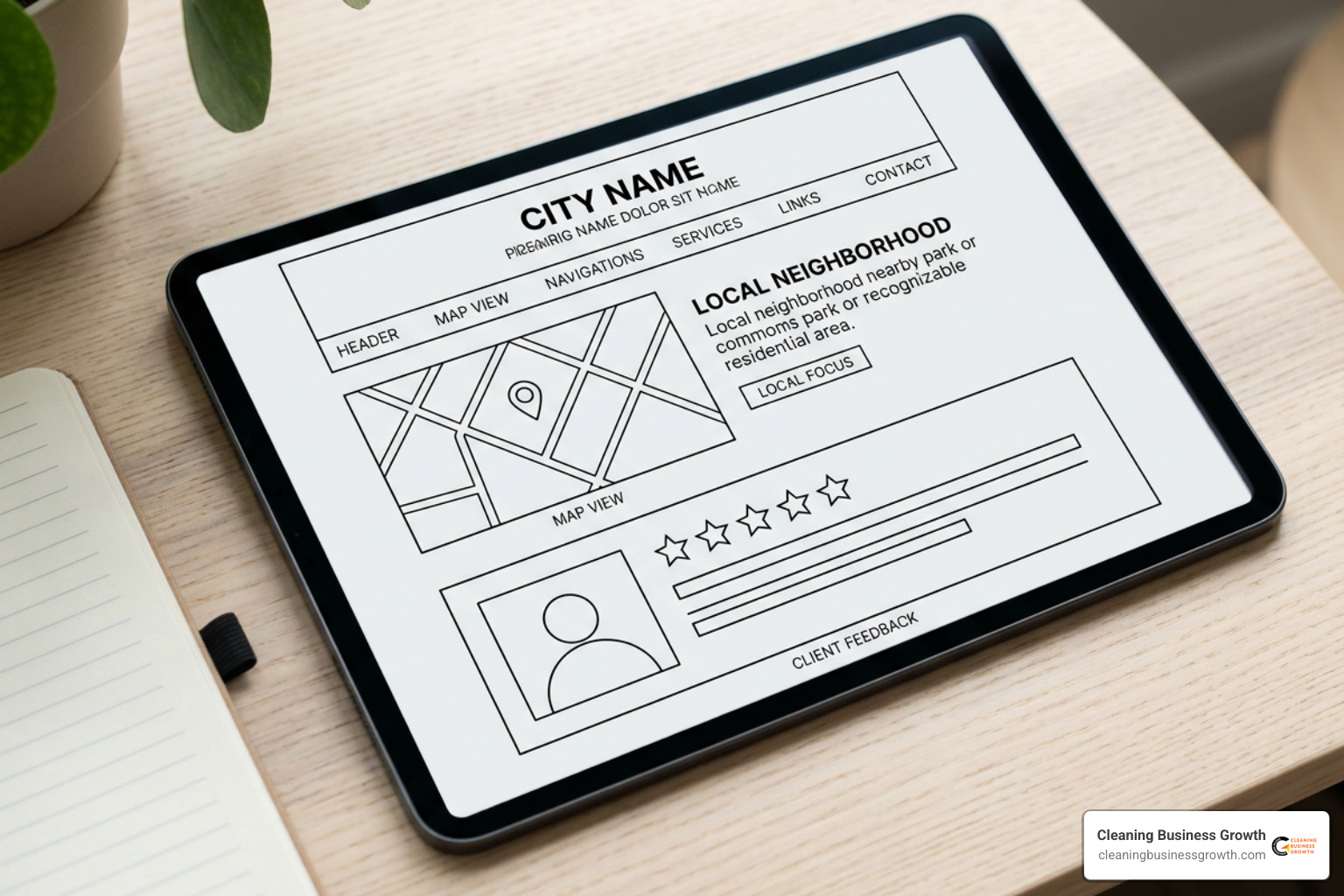
- Hyperlocal Landmarks and Neighborhood Context: Write unique copy for each location page that mentions well-known local districts, subdivisions, regional architecture styles, and local soil or pollen challenges.
- Prevent Duplicate Content: Never copy and paste the same 500 words across ten city pages while only changing the city name. Google filters out low-effort, spun pages. Provide distinct descriptions, pricing nuances, and staff introductions for each region.
- Localized Reviews and Proof: Embed customer testimonials and photos from jobs completed specifically within that designated neighborhood or town.
Technical Setup and Schema in Local SEO for Cleaning Service Growth
Search engines rely on structured data to accurately index your service offerings and physical service perimeter.
- LocalBusiness & HomeAndConstructionBusiness Schema: Implement JSON-LD structured data on your website. Define your exact business category, primary telephone number, operational hours, geo-coordinates (latitude and longitude), price range, and distinct service catalog types (e.g., CarpetCleaning, HouseCleaning).
- Core Web Vitals & Speed Optimization: Over 88% of visitors abandon websites that take longer than 3 seconds to load. Compress high-resolution photos into modern WebP formats, enable browser caching, and ensure touch targets and click-to-call buttons are prominent for smartphone users.
Building Local Citations, Directory Consistency, and Backlinks
Search engines index the broader web to verify that your company is a genuine local entity. Despite shifts in modern search algorithms, fundamental off-page SEO is not dead—it has simply evolved toward verified local trust signals.
NAP Consistency and Directory Auditing
NAP stands for Name, Address, and Phone number. Research shows that 41% of businesses suffer from inconsistent online listings, which damages algorithmic trust. Furthermore, businesses listed across three or more verified directories are 70% more trusted by both search engines and customers.
- Audit Core Directory Platforms: Ensure your exact business name, street or service address, and primary local phone number match across Yelp, Angi, Thumbtack, Bing Places, Apple Maps, YellowPages, and Nextdoor.
- Standardize Address Formatting: Keep your naming conventions identical. If you use “Suite 100” or “Street” on your GBP, do not use “Ste. 100” or “St.” erratically across directory submissions.
- Protect Against Unintended Edits: Periodically audit your directory listings to reject crowd-sourced edits or incorrect automated data aggregator updates that create business hour discrepancies.
Local Sponsorships and Community Link Acquisition
Acquiring authoritative local backlinks from organizations within your immediate service radius signals strong community prominence to search engines:
- Local Youth Sports and School Teams: Sponsor a local Little League team, soccer league, or school booster club in exchange for a branded logo link on their official sponsors page.
- Chamber of Commerce Memberships: Join your regional Chamber of Commerce and local business associations to earn reputable
.organd regional directory backlinks. - Strategic Referral Partnerships: Partner with local real estate agencies, property management companies, home staging professionals, and carpet installation contractors to trade referral recommendations and website links.
- Community Event Drives: Sponsor charity cleanups, local 5K runs, or regional pet shelter fundraisers to earn mentions and press links from community event websites and neighborhood blogs.
Systematic Customer Review Generation and Reputation Management
Online reviews are a primary factor in Local Pack rankings and real-world conversion. Research shows that 79% of people trust online reviews as much as personal recommendations. Understanding the importance of reviews to cleaning business growth allows you to turn satisfied clients into your strongest marketing asset.
Automated Post-Job Review Workflows
Hoping that a satisfied customer will proactively search for your profile and leave a review rarely yields results. Unhappy customers often rush to leave feedback, while delighted clients need an easy, direct path.
Implement a systematic outreach routine:
- Automate Timing via SMS and Email: Dispatch an automated review request via text message and email within 2 to 4 hours of job completion, while the sparkle of their clean home or sanitized office space is fresh in their mind.
- Provide Direct One-Click Links: Generate a direct Google review link from your GBP dashboard so customers arrive straight at the rating interface with a single tap.
- Maintain Multi-Platform Diversity: Direct roughly 70% of your ongoing feedback to your Google Business Profile, while steering the remaining 30% across secondary platforms like Facebook, Yelp, and Nextdoor to build balanced trust signals. Learn how our team handles systematic reviews to boost local prominence.
Review Velocity and Keyword-Rich Responses
Google values review velocity (the steady pace of incoming feedback) as much as your overall star rating. Aim to generate 5 to 10 authentic reviews every month to maintain active prominence.
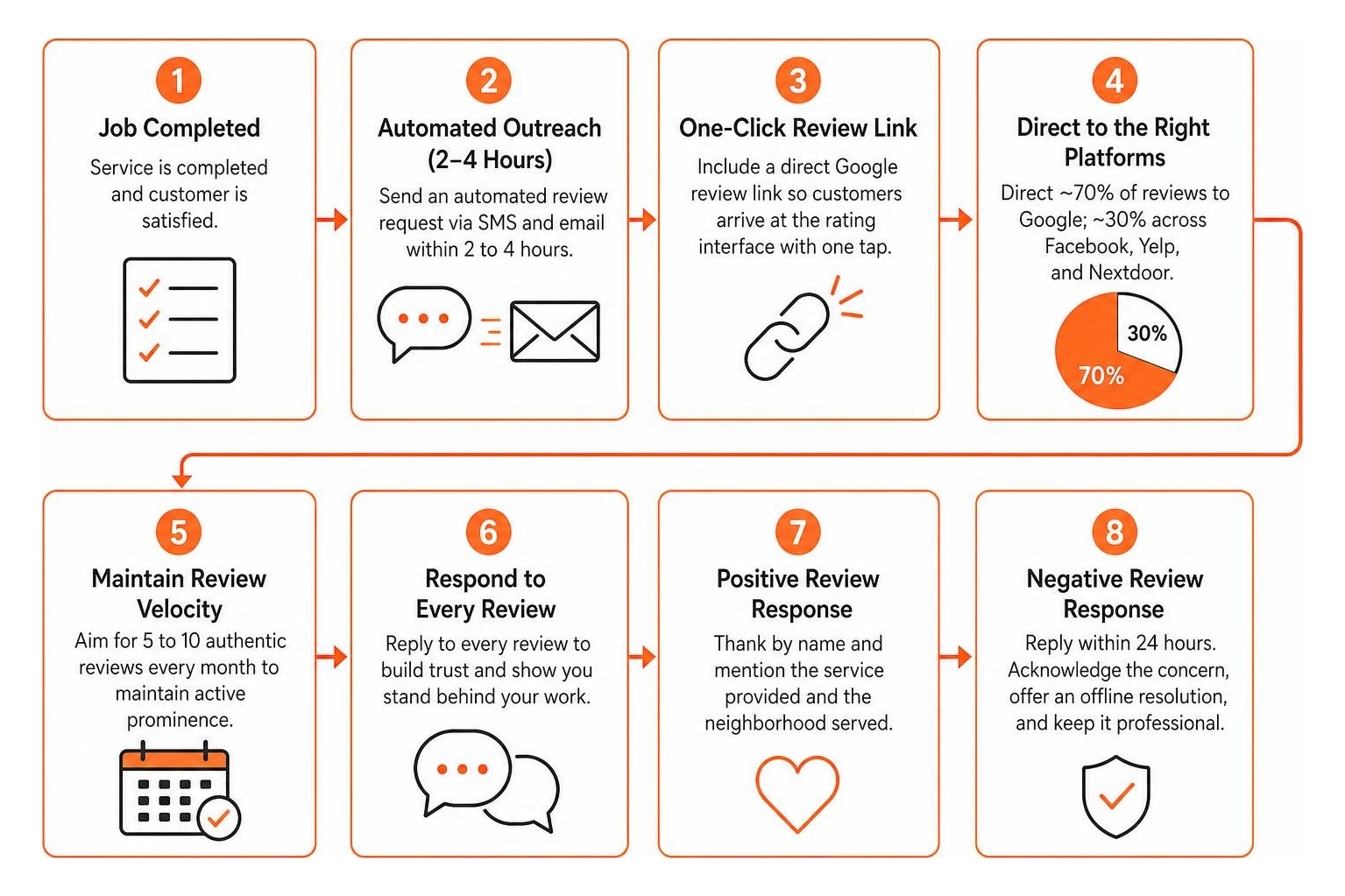
Always respond to every review you receive:
- Responding to Positive Reviews: Thank the client by name and naturally mention the service provided and the neighborhood served (e.g., “Thank you, Sarah! We love providing routine bi-weekly house cleaning for your home in North Hills!”).
- Handling Negative Reviews Professionally: Reply within 24 hours with a calm, professional tone. Acknowledge the concern, offer an offline resolution via a direct manager’s phone line, and demonstrate to prospective customers that you stand behind your work.
Frequently Asked Questions About Cleaning Service SEO
How long does it take to see results from local SEO?
Most cleaning companies observe initial ranking adjustments and directory indexation within 30 to 60 days of executing profile optimizations and on-page updates. Significant organic movement, consistent 3-Pack placement, and sustained inbound call growth typically occur between 90 and 180 days, depending on local competitor density.
Do I need a physical storefront address to rank locally?
No. If you operate your cleaning business from a home office or secure storage space without customer reception, you can register as a Service-Area Business (SAB) within Google Business Profile. Google allows you to hide your physical street address from public view while specifying your active delivery cities and postal zip codes.
How do I track my local search performance for free?
You can track your local progress using free native tools:
- Google Search Console: Monitor your website’s organic clicks, impressions, average keyword ranking positions, and crawl health.
- Google Analytics 4 (GA4): Track website visitor traffic, bounce rates, time on page, and direct quote form completions.
- Google Business Profile Insights: Monitor how many calls, website visits, and direction requests your listing generates directly from Google Maps and search results every month.
Conclusion
Local search visibility provides a predictable, compounding foundation for commercial and residential cleaning operations. Instead of chasing cold prospects or paying high per-lead fees to third-party networks, claiming your position in the Google Map Pack brings pre-qualified, ready-to-book clients directly to your business.
Scaling a profitable cleaning company requires an experienced partner who understands the operational nuances of the cleaning industry. Explore our specialized SEO for cleaning services to build a customized, no-contract growth system that keeps your schedule full and turns local search into your most profitable marketing channel.